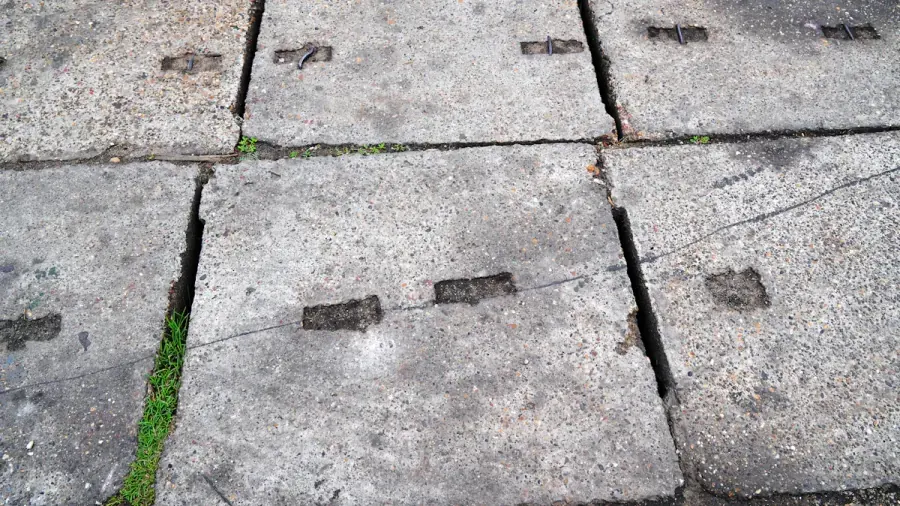
Sidewalk Leveling in Lubbock, TX
A lipped sidewalk panel is a liability and a $500 fix. We lift settled panels back level with foam injection in under an hour, no demolition, no permit, and the walk is usable the moment the ports are patched.
Sidewalk leveling lifts a settled concrete panel back flush with its neighbours, and in Lubbock a single panel costs $500 to $700. A four to six panel front walk runs $700 to $1,400. The panel is drilled with 5/8 inch ports, polyurethane foam is injected underneath to fill the washout and raise the concrete, and the ports are patched with a colour-matched compound. The whole job takes under an hour per panel.
The economics are lopsided in a way they are not on larger slabs. Replacing one panel means saw cutting, breaking out, haul-off, forms, a new pour and a week of cure, and in Lubbock it also means a construction permit and a City-registered contractor. Lifting the panel you already have costs roughly half as much, is finished before lunch, and skips the paperwork entirely.
Half an inch is where a lip becomes a liability
A vertical difference of half an inch at a joint is the threshold most insurers and municipalities treat as a trip hazard, and a quarter inch is where people start catching a toe. In most Texas cities, Lubbock included, the adjoining property owner maintains the walk fronting their lot even though it sits in the public right of way. A claim from a fall on your frontage typically lands on your homeowners liability, not the City's.
That is why sidewalk work is the one category where people call before it looks bad. A panel with a three-quarter-inch lip still looks like a sidewalk. It is also the exact geometry that catches a shoe at walking pace.
Settlement or heave: two problems that look identical
A lip tells you two panels are at different heights. It does not tell you which one moved, and getting that wrong wastes the whole job.
Settlement means the low panel dropped because the sand under it washed out. That is the majority of Lubbock cases and it lifts permanently once the water source is addressed.
Heave means the high panel rose. Two things cause it here. The first is a tree root, which keeps growing and will re-lift the panel no matter what is injected under its neighbours. The second is smectitic Randall clay on playa-margin lots, which swells when the basin ponds and shrinks when it dries, moving the same panel up and down across seasons.
We shoot the full run against a fixed reference before quoting. If the high panel is the one that moved, lifting the rest of the walk to match it is the wrong repair, and we say so.
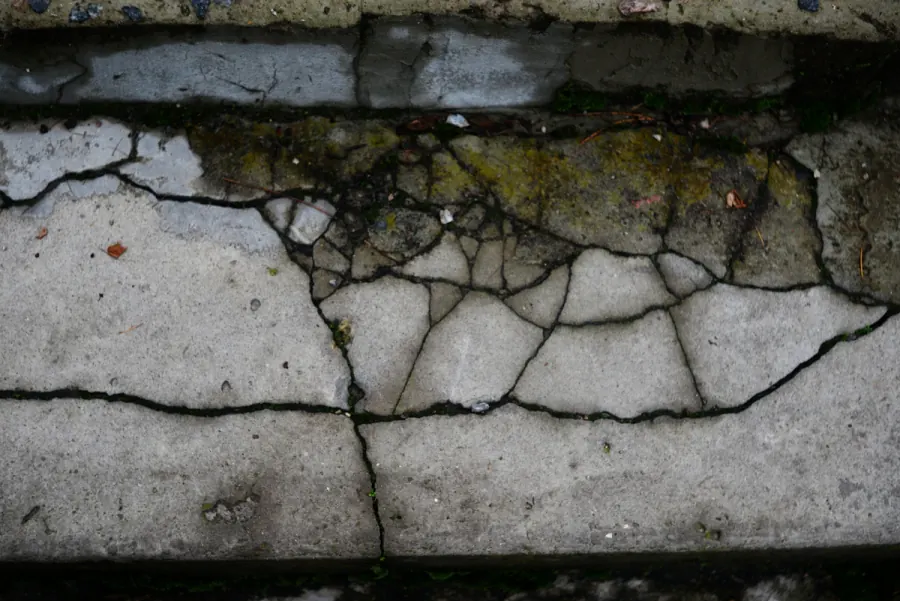
How we level a sidewalk
Under an hour per panel, and the walk reopens as soon as the ports are patched.
- 1
Measure every lip on the run
We put a straightedge across each joint and record the height difference, then shoot the whole run with a laser so we know which panels are low and which are simply neighbours to a high one. Half the panels people want lifted turn out to be level, sitting next to one that heaved.
- 2
Separate settlement from heave
Settled panels get lifted. Heaved panels get diagnosed first, because a tree root or swelling Randall clay under one panel will push it straight back up. If the cause is root growth we say so in writing and quote root work or panel replacement instead of a lift that will not hold.
- 3
Drill 5/8 inch ports
Small ports matter more on a walkway than anywhere else, because they are at eye level every day. A 5/8 inch patch in a broomed surface disappears from standing height. A 2 inch mudjacking hole does not, which is why foam is the default on visible front walks.
- 4
Fill the washout
First injections fill the cavity under the panel and consolidate the loose sand around it. A four-inch sidewalk panel is light, so it takes very little pressure to move once the void is full. Getting the fill right, not the lift, is what stops the panel dropping again next spring.
- 5
Raise to match the run
Panels are lifted in small increments with the laser on the slab, matched to the adjacent panels rather than to some abstract level. The target is a continuous walking surface with no lip over a quarter inch and the original drainage fall preserved.
- 6
Patch and open the walk
Ports are filled with colour-matched compound, the surface is swept and rinsed, and the walk is back in service immediately. We hand over notes on any downspout or grade issue that is feeding water under the run.
Sidewalk leveling cost in Lubbock
Lifting a sidewalk in Lubbock costs $500 to $700 for one panel, and the per-panel price falls as the run gets longer because mobilisation is a fixed part of a small job. Replacement pricing below assumes four-inch minimum thickness per City of Lubbock requirements and excludes permit fees.
| Job | Size | Lift with foam | Replace panel |
|---|---|---|---|
| One settled panel | 25 sq ft | $500 to $700 | $900 to $1,500 |
| Two adjoining panels | 50 sq ft | $550 to $900 | $1,400 to $2,400 |
| Front walk, 4 to 6 panels | 120 sq ft | $700 to $1,400 | $2,600 to $4,200 |
| Full frontage run | 250 sq ft | $1,100 to $2,600 | $5,000 to $8,500 |
| Porch stoop or landing | 40 sq ft | $600 to $1,100 | $1,600 to $2,800 |
A stoop or porch landing lifts like a sidewalk panel but often needs the step riser height corrected at the same time, so it is quoted with the entry rather than with the walk.
Lubbock ordinance requires a construction permit from the building official before anyone reconstructs, repairs, alters or replaces a sidewalk on a public street or alley, and the contractor must be registered with the City carrying $100,000 general liability or a $20,000 bond. Lifting an intact panel in place is treated as a repair and generally avoids that process. On a single-panel job, that difference is most of the reason the price gap is so wide.
Why Lubbock walks move before the driveway does
A sidewalk panel is four inches thick and sits on a shallow base, so it follows the smallest void. A driveway is the same thickness but carries wheel loads that compact the base under it, and it is usually wider, so it can bridge a larger cavity. On the same lot, with the same washout, the walk shows it first.
The washout itself is a Llano Estacado phenomenon. Lubbock's 19 annual inches of rain arrive in a handful of intense storms onto Amarillo fine sandy loam and Acuff loam, both well drained and moderately permeable over a calcic horizon 30 to 60 inches down. Water moves down through sand, reaches cemented caliche, and travels laterally, taking fines with it. Where a downspout, a driveway approach, or an irrigation line concentrates that flow, the cavity forms fast.
Older neighbourhoods, older concrete
Tech Terrace was established in 1925 next to Texas Tech and most of its housing stock dates to the 1930s. Maxey Park was established in 1928 with homes mostly from the 1950s. Slaton's townsite grid, laid out in 1911 on a Washington DC-style plan with diagonal avenues, has some of the oldest public flatwork in the county. A great deal of that concrete is on its original pour, which is a testament to how durable a well-made slab is, and exactly why lifting it rather than binning it is the right call.
Commercial and ADA frontage
Commercial frontages carry a higher standard and more exposure. A lipped panel outside a storefront is both a slip-and-fall risk and an accessibility issue, and the running slope and cross slope of an accessible route are tightly specified. Lifting can correct a settled panel back into tolerance where the panel itself is intact, which is usually faster and far less disruptive than closing a section of frontage for demolition and a pour. Larger commercial runs are quoted through commercial concrete leveling.
Sidewalk leveling questions, answered
Can you level a sidewalk without replacing it?
Yes, and it is the normal way to fix an uneven sidewalk. A single settled panel is lifted back level in under an hour by injecting polyurethane foam through 5/8 inch ports, at a typical cost of $500 to $700 against $900 or more to demolish and repour the same panel. The concrete stays, the ports get patched, and the walkway is usable immediately.
How much does it cost to level a sidewalk in Lubbock?
A single sidewalk panel costs $500 to $700 to lift in Lubbock, and a four to six panel front walk runs $700 to $1,400. Mudjacking is slightly cheaper at $500 to $950 for the same front walk but uses 1 to 2 inch holes rather than 5/8 inch, which shows far more on a visible walkway. Most homeowners with multiple lipped panels find the per-panel price drops as the job gets larger.
How big a lip is a trip hazard?
Half an inch is the threshold most jurisdictions and insurers use, and a quarter inch is where a lip becomes noticeable underfoot. Above half an inch you are looking at a genuine liability, particularly on a public walk where pedestrians are entitled to expect a continuous surface. Lubbock ordinance sets residential sidewalk crossings at a maximum two percent slope, which gives a sense of how tight the tolerance is meant to be.
Can tree roots lift a sidewalk?
Yes, and that is the one case where lifting alone will not hold. A growing root under a panel keeps expanding, so the panel will re-lift regardless of what is injected beneath it. The fix is root pruning or a root barrier alongside the concrete work, or replacing the panel and rerouting the walk. We flag root heave in the written assessment rather than lifting a panel we know is coming back up.
Do I need a permit to fix my sidewalk in Lubbock?
Lifting an existing sidewalk panel in place is a repair and generally does not require a permit. Replacing, reconstructing or altering a sidewalk on a public street or alley does: the Lubbock ordinance requires a construction permit from the building official, and the contractor must be registered with the City carrying $100,000 general liability or a $20,000 bond. This is a concrete reason to lift rather than replace where the concrete is sound.
What is the difference between settling and heaving on a sidewalk?
Settlement drops a panel, heave pushes it up, and the fix is different for each. Settled panels sit low because the base washed out, and lifting them is a permanent fix once drainage is corrected. Heaved panels sit high because something underneath expanded, usually a tree root or, on playa-margin lots, smectitic Randall clay swelling with moisture. Lifting the neighbours to match a heaved panel is a mistake, because the heaved one will come back down.
How long does sidewalk leveling take?
A single panel takes under an hour and a typical front walk takes one to two hours. Polyurethane foam reaches roughly 90 percent strength in about 15 minutes, so the walk is usable as soon as the ports are patched. Mudjacking the same panels needs 24 to 72 hours before load, which on a front walk usually means taping it off for a couple of days.
Who is responsible for the sidewalk in front of my house?
In most Texas cities, including Lubbock, the adjoining property owner is responsible for maintaining the sidewalk fronting their property even though it sits in the public right of way. That means a trip hazard on your frontage is your exposure, and a claim arising from it typically lands on your homeowners liability rather than the City's. It also means you are the one who has to pull the permit if the panel gets replaced rather than lifted.
Why do sidewalks sink in Lubbock specifically?
Lubbock sidewalks sink because sandy eolian soil washes out from under them during the few intense storms that deliver most of the city's 19 annual inches of rain. Water passes easily through Amarillo and Acuff series sands, hits the caliche caprock 30 to 60 inches down, and runs sideways, taking fines with it. A four-inch sidewalk panel is light and shallow, so it follows the smallest void, which is why walks often show settlement before the driveway beside them does.
Get a quote on your sidewalk
Tell us how many panels are off and roughly how big the lip is. We come out, measure the full run, and quote a fixed price per panel with the lift plan in writing.
- Free written scope with a measured lift plan, not a verbal number
- Polyurethane foam on 5/8 inch holes, patched and colour matched
- Drive on the slab the same day, usually within the hour
- Insured crews, written workmanship guarantee on every lift