Concrete Leveling in Levelland, TX
Levelland concrete carries loads most residential flatwork never sees. Work trucks on house driveways, equipment on yard pads, forklifts on shop floors. That changes which method is right and, sometimes, whether lifting is right at all.
Concrete leveling in Levelland costs $5 to $12 per square foot with polyurethane foam and $3 to $8 with mudjacking, and this is the one town in the service area where slurry is frequently the right recommendation rather than the fallback, because shop floors, equipment pads and heavily loaded driveways are so common here.
Levelland is the Hockley County seat, about 30 miles west of Lubbock, with 12,652 residents at the 2020 census in a county of roughly 21,500. County agricultural income runs near $71 million a year, around 70 percent from crops including cotton, sorghum, wheat, soybeans, corn, hay and sunflowers, alongside petroleum production. That economy puts heavy vehicles on concrete that was often poured for lighter use.
Why heavy loading changes the diagnosis
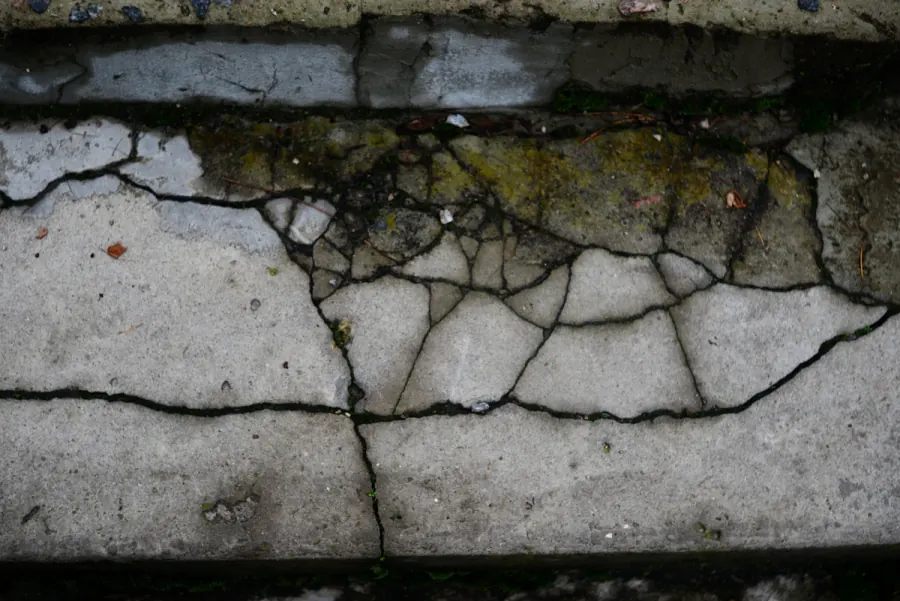
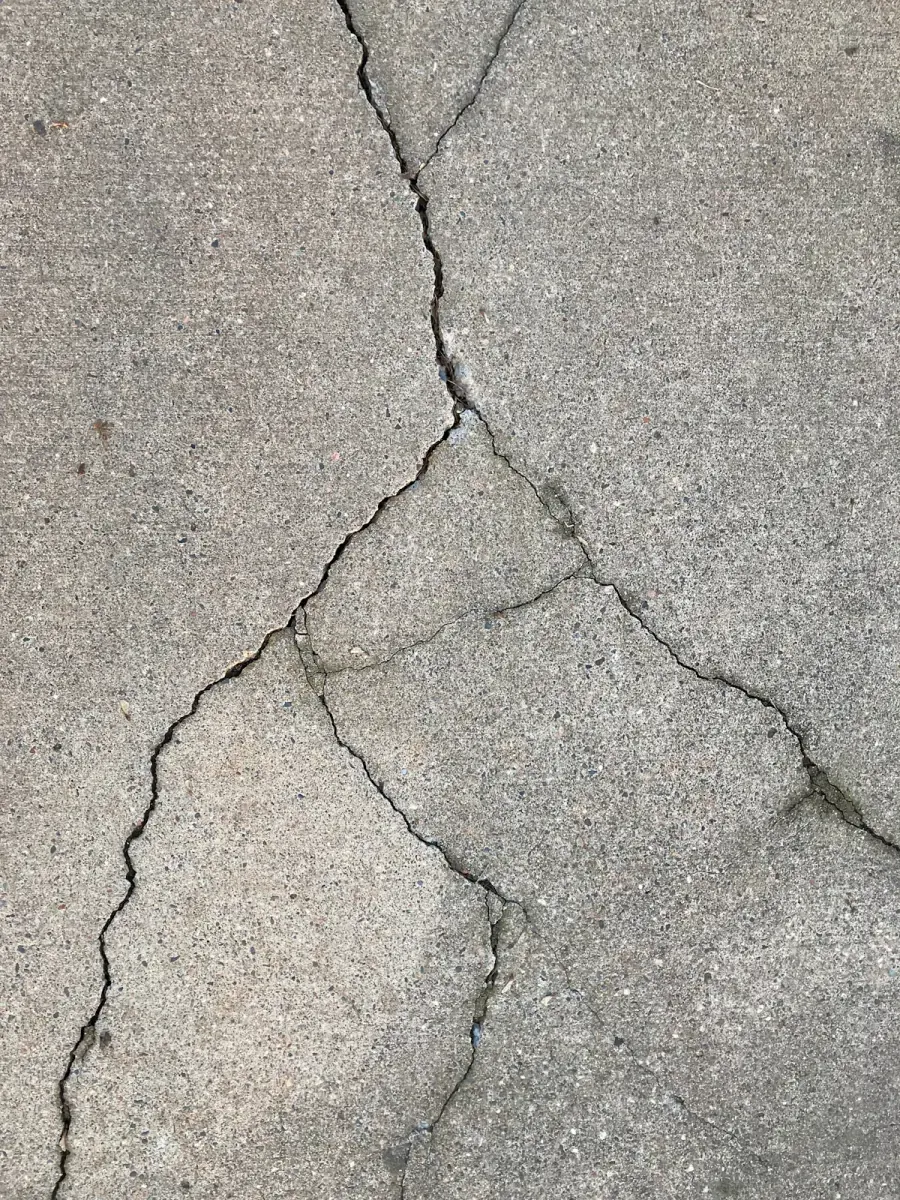
A void under a slab is a problem. A void under a slab that a loaded truck drives over is a different problem, because the concrete bends across the edge of the cavity under every axle pass until it cracks. That is why Levelland flatwork often arrives cracked rather than merely low, and why catching it early is worth real money: an inch of drop on sound concrete is a lift, while a slab broken into several fragments may be a replacement.
It also changes what a lift can promise. Injecting material under a slab restores elevation and restores support, but it does not add structural capacity. A four inch residential-spec driveway carrying a service truck daily was under-specified for that duty from the day it was poured, and no method fixes that. Thickness should be core-measured at the first port so you know which situation you are in before any material goes in.
Shop floors, yards and equipment pads
Thick shop and yard slabs are the best lifting candidates there are, and they are also where mudjacking earns its place. On six inches or more of concrete over compacted base, a few thousand pounds of cement slurry is immaterial next to the design load, and the $2 to $4 per square foot saving compounds fast across a large floor. The trade-off is 24 to 72 hours of cure before load, against about an hour for foam.
Before drilling anything, locate what is in the slab. Conduit runs, floor drains, in-slab plumbing and trench drains all need planning around. On wash pads and equipment yards, also look at surface contamination, since it affects both the patching material and how the work is handled.
Scoping is done zone by zone so a working shop keeps operating. One bay is drilled, lifted and patched, then returns to service before the next starts. On a foam job that means the bay is back in use the same shift.
What concrete leveling costs in Levelland
Levelland pricing generally tracks Lubbock pricing, but ask whether a travel charge applies across the thirty mile run. Shop and yard slabs are best quoted by zone.
| Slab | Size | Foam | Mudjacking |
|---|---|---|---|
| Sidewalk panel | 25 sq ft | $500 to $700 | $300 to $500 |
| Front walk | 120 sq ft | $700 to $1,400 | $500 to $1,000 |
| Two-car driveway | 500 sq ft | $1,200 to $3,500 | $1,500 to $4,000 |
| Garage or shop bay | 600 sq ft | $3,000 to $7,200 | $1,800 to $4,800 |
| Shop floor zone | 1,500 sq ft | $7,500 to $18,000 | $4,500 to $12,000 |
| Equipment or wash pad | 800 sq ft | $4,000 to $9,600 | $2,400 to $6,400 |
Both methods are priced on every Levelland quote because the right answer genuinely varies here. On thick slabs over sound base mudjacking usually wins on value. On thin residential flatwork over washed-out sand it usually does not.
Mudjacking saves $2 to $4 per square foot and costs you 24 to 72 hours before the slab takes load. On a shop bay you can schedule around, that is a good trade. On a single-entrance yard or the only driveway at a house, three days of restricted access usually costs more than the saving. Ask for both numbers and both timelines on the same sheet so the call is yours.
Why the soil out here washes out
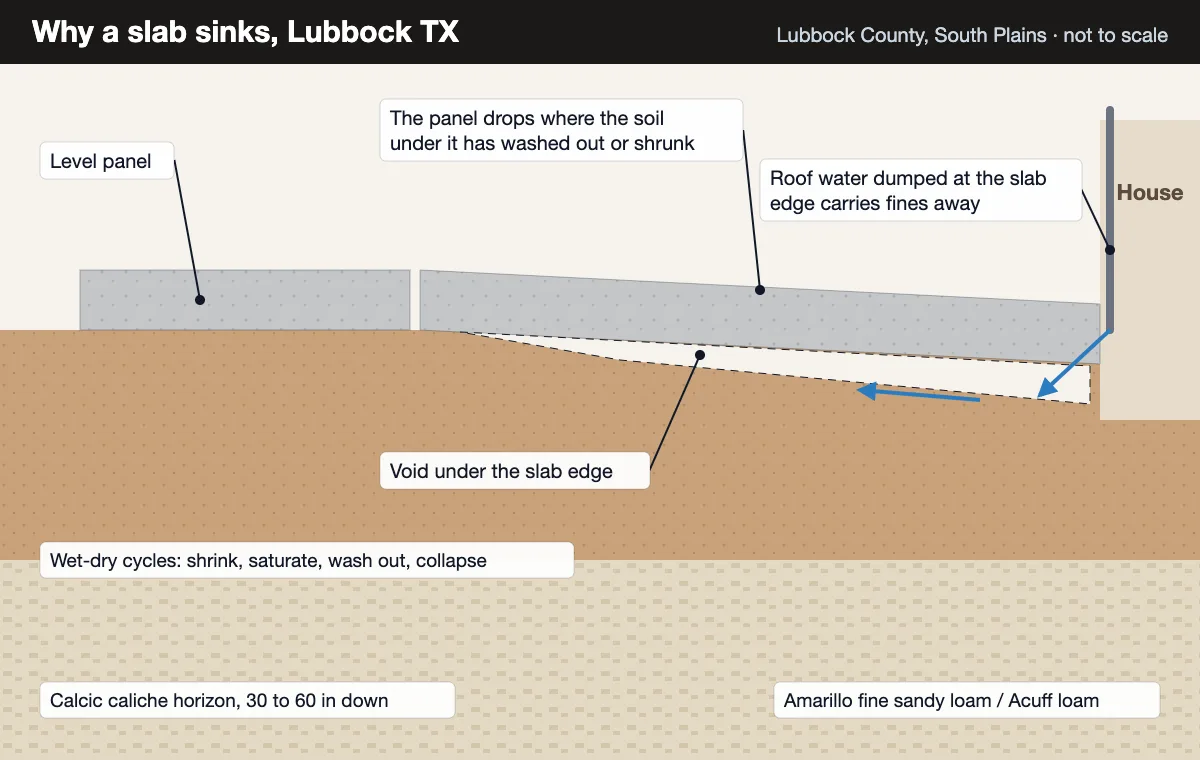
Hockley County soils are the same family as Lubbock's: Amarillo fine sandy loam and Acuff loam, formed in loamy eolian deposits of the Blackwater Draw Formation, well drained and moderately permeable over a calcic caliche horizon roughly 30 to 60 inches down. Water infiltrates readily, reaches that cemented caprock layer, then runs laterally carrying fine particles with it.
Under a slab that leaves a coarse sand skeleton with open voids between grains. With about 19 inches of annual rain arriving in a handful of intense storms, and long dry spells in between that desiccate and shrink the subgrade, the cycle is shrink, saturate, wash, collapse. Add a work truck driving over the result and the failure is faster and messier than it would be on a house with a sedan in the drive.
Irrigation and wash water are worth ruling out
On agricultural and industrial property here, sustained water delivery to one spot is a common underlying cause. Centre pivot overspray, a leaking service line, a wash pad draining to the wrong side, or a downspout with no gutter extension all saturate the same patch of sandy subgrade repeatedly. A good scope names the water source observed, because a void that formed from continuing water delivery will re-form after any lift.
Permits and contractor rules
Lifting an existing slab in place is generally a repair and usually does not require a permit. Replacing a driveway approach or a public sidewalk does, and Levelland sets its own permitting and contractor registration requirements separately from City of Lubbock rules, so confirm with the City of Levelland before replacement work starts. Texas has no state general contractor licence for concrete work, which means insurance and registration are municipal questions worth asking any contractor directly. More on method selection is on the mudjacking page.
Levelland concrete leveling questions
How much does concrete leveling cost in Levelland?
Concrete leveling in Levelland costs $5 to $12 per square foot with polyurethane foam and $3 to $8 with mudjacking. Levelland is about 30 miles west of Lubbock, so ask whether a travel charge applies or whether small jobs are batched onto a scheduled day. A two-car driveway typically falls between $1,200 and $3,500.
Can a driveway that takes a work truck be lifted?
Yes, provided the slab was thick enough for that loading in the first place. A lift restores elevation, it does not add structural capacity, so a four inch residential-spec driveway carrying a loaded service truck daily will keep failing whatever goes under it. Thickness should be core-measured at the first port so you know which situation you are in before any material is pumped.
Is mudjacking a good option for a shop floor?
Mudjacking is often the better option for a thick shop floor, and this is the clearest case for it over foam. On six inches or more of concrete over compacted base, the weight of a cement slurry is immaterial next to the design load, and the $2 to $4 per square foot saving compounds across a large area. The trade-off is 24 to 72 hours of cure before the floor takes load again.
Can oilfield and equipment yard slabs be lifted?
Equipment yard and wash pad slabs can be lifted when they are sound, and they are usually thick enough to be good candidates. The two checks that come first are what is buried in the slab, since conduit and drainage runs need locating rather than discovering, and what the slab is contaminated with, because surface condition affects both the patching material and how the work is handled.
Why do Levelland driveways crack rather than just drop?
Driveways here crack as well as drop because heavy vehicle loading concentrates stress at exactly the point where support has been lost. On a slab with a void under one section, a work truck's axle load bends the concrete over the edge of that cavity until it cracks. That is why catching settlement early is worth money: an inch of drop is a lift, and a cracked slab may be a replacement.
Do you serve Hockley County outside the city limits?
Yes, the service area covers Levelland and the surrounding Hockley County area, including farm and acreage properties on the county roads. The county's agricultural income runs around $71 million a year, roughly 70 percent from crops including cotton, sorghum, wheat, soybeans, corn, hay and sunflowers, alongside petroleum production, so a good share of the slabs here are pads, shop floors and equipment slabs rather than house flatwork.
How soon can equipment go back on a lifted slab?
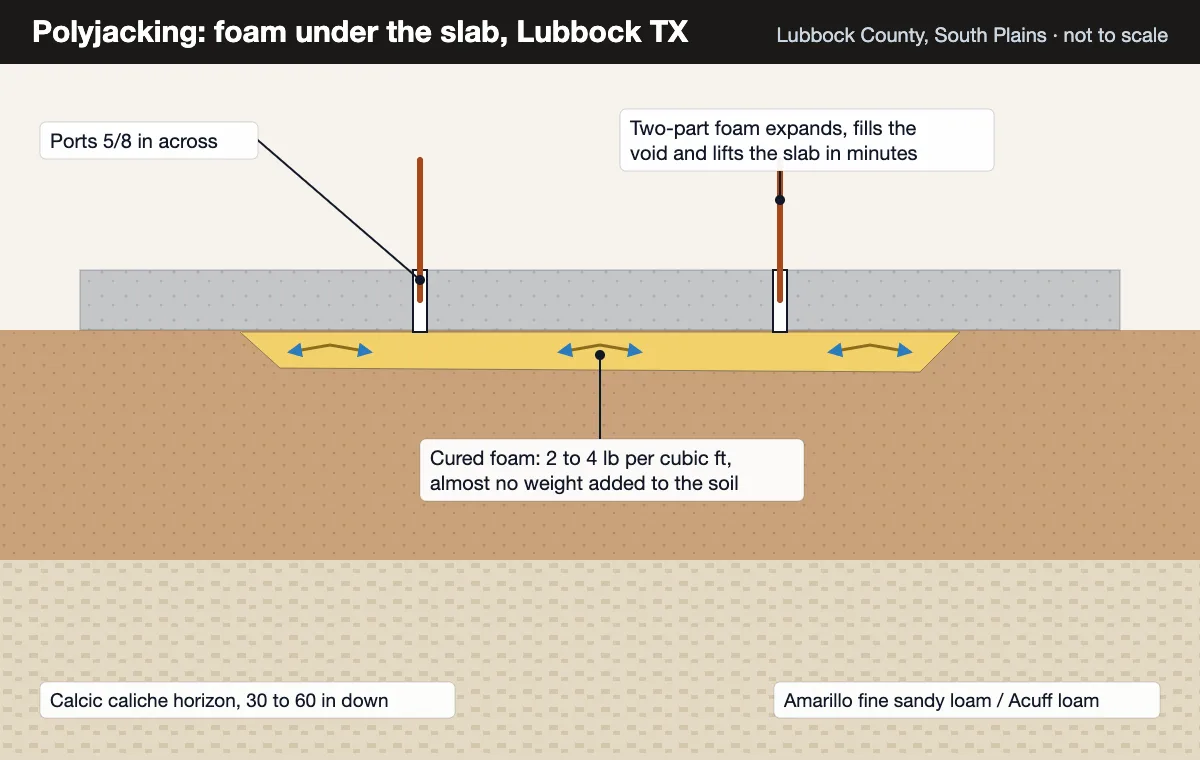
Same day with polyurethane foam, usually within the hour, because the foam reaches roughly 90 percent of its compressive strength about 15 minutes after injection. Mudjacking needs 24 to 72 hours before loading. On a working yard or shop that timing difference often decides the method regardless of the price gap, so it belongs in the quote rather than being left for you to discover.
Do you need a permit to level concrete in Levelland?
Lifting an existing slab in place is generally treated as a repair and usually does not require a permit. Replacing a driveway approach or a public sidewalk does, and Levelland sets its own permitting and contractor registration requirements separately from City of Lubbock rules. Confirm with the City of Levelland before any replacement work starts.
Get a Levelland quote
Tell us the slab and what drives on it. Ask for foam and mudjacking priced side by side with the cure time for each, and an honest answer if the concrete is simply too thin for the load it carries.
- Free written scope with a measured lift plan, not a verbal number
- Polyurethane foam on 5/8 inch holes, patched and colour matched
- Drive on the slab the same day, usually within the hour
- Ask for proof of insurance and any guarantee terms in writing