Concrete Lifting vs Replacement
Lifting costs a third to a half of replacement and finishes in hours instead of weeks. It is also the wrong answer on a slab that has genuinely failed. Here is how to tell which one you have.
Lifting is the right repair when the ground failed and the concrete did not. Replacement is the right repair when the concrete itself has failed. That single distinction decides almost every case, and most settled flatwork in Lubbock falls on the lifting side because our failure mechanism is washout under sound slabs rather than deterioration of the concrete.
The money follows the same line. A 500 square foot driveway lifts for $1,200 to $3,500 and replaces for roughly $5,000 to $9,000. But a lift on a slab that should have been replaced is money spent twice, so the diagnosis comes before the price.
The four conditions that rule lifting out
Any one of these means we recommend replacement, and we put it in the written assessment rather than discovering it halfway through a job.
Measured thickness under four inches. We core-measure at the first port rather than assume. City of Lubbock requires a minimum of four inches for sidewalks and driveways, and a slab poured thinner than that has neither the strength to be lifted safely nor the capacity for the load it carries.
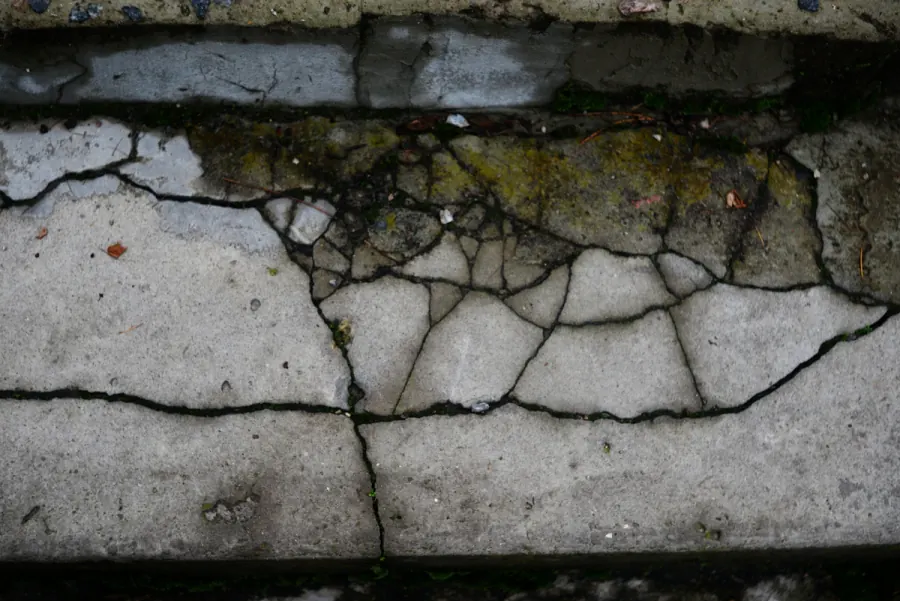
Breakage into many small fragments. A slab in two or three sound pieces lifts fine with an adjusted port plan. A slab in a dozen pieces needs each one supported independently, and the result is a patchwork surface at roughly the right height rather than a repaired driveway.
Spalling through to the aggregate. When the wearing surface has failed and the aggregate is exposed across an area, the concrete has lost its service life. Lifting relocates that problem to a better elevation without solving it.
Deteriorated perimeter bearing. A slab needs sound edges to distribute lift. Where the perimeter has crumbled, injection pressure has nothing to push against at the boundary and the lift concentrates badly.
The question to ask any replacement quote
Replacement is often sold on the idea that it fixes the base. It only does if the base work is actually in the scope, and frequently it is not. A quote that prices demolition, haul-off, forming and a pour, but says nothing about base specification, compaction or drainage, puts new concrete on the same subgrade that failed the old slab.
Ask for three things in writing: the base material and depth, the compaction standard, and what is being done about the water source that caused the settlement. A replacement that includes all three genuinely is a permanent fix. One that includes none of them is newer concrete on an unchanged problem, and it will settle again on the same schedule.
That question matters because our soils here are unforgiving of skipped base work. Amarillo fine sandy loam over a calcic caliche horizon moves water sideways and carries fines with it. A slab poured on uncompacted sand will find the same voids the last one did.
What each option actually costs
These are typical Lubbock figures for the same slabs both ways. Replacement numbers assume removal of the existing concrete, base preparation and a new pour at the City minimum four inch thickness.
| Slab | Size | Lift with foam | Replace | Back in service |
|---|---|---|---|---|
| Sidewalk panel | 25 sq ft | $500 to $700 | $400 to $900 | 1 hour vs 7 days |
| Front walk | 120 sq ft | $700 to $1,400 | $1,400 to $3,000 | 1 hour vs 7 days |
| Driveway approach | 200 sq ft | $1,000 to $2,400 | $2,200 to $4,500 | 1 hour vs 14 days |
| Two-car driveway | 500 sq ft | $1,200 to $3,500 | $5,000 to $9,000 | 1 hour vs 28 days |
| Patio | 250 sq ft | $800 to $2,200 | $2,500 to $5,500 | 1 hour vs 7 days |
| Garage floor | 400 sq ft | $2,000 to $4,800 | $5,500 to $11,000 | 1 hour vs 28 days |
Back-in-service times compare polyurethane foam against a new pour reaching full vehicle loading. Mudjacking sits between the two at 24 to 72 hours. Replacement figures are indicative and vary widely with access, reinforcement, finish and disposal.
Look at the first row. On one 25 square foot panel, replacement is competitive with lifting, because a lift carries a minimum job charge while a single panel pour is a small job for a flatwork crew. We do not automatically recommend lifting on single-panel work, and where replacement is the better value we say so.
The costs that do not appear on a replacement quote
Time out of service is the big one. Seven to twenty-eight days before a new slab takes full vehicle load, against about an hour for a foam lift. On a single driveway that is a month of parking on the street.
Permits and contractor registration are the second. Under City of Lubbock rules, construction, reconstruction, repair, alteration or replacement of sidewalks and driveways on a public street or alley requires a permit from the building official, and the contractor must be registered with the City carrying either $100,000 in general liability insurance or a $20,000 compliance bond. Lifting an existing slab in place is generally a repair and usually avoids that path entirely. Confirm current requirements with Building Safety at 1314 Avenue K, 806-775-2087.
Disruption is the third: demolition noise, a skip on the drive, heavy equipment on the lawn, and sections of landscaping disturbed at the slab edge. None of that appears as a line item, and all of it is real.
The honest drawbacks of lifting
Lifting does not repair cracks, spalling or surface damage, so a cosmetically poor slab ends up cosmetically poor at the right elevation. It leaves patches, 5/8 inch with foam and 1 to 2 inch with mudjacking. And it does not address the cause of the settlement, so an uncorrected downspout or grade problem will re-open the void. Every scope we write names the water source we observed for exactly that reason.
How to decide on your own slab
Five questions settle it. Is the concrete thicker than four inches, measured rather than assumed? Is it in a small number of sound pieces rather than many? Is the wearing surface intact? Are the edges sound? And is the elevation the only thing genuinely wrong with it?
Five yeses means lift. Any no means at least discuss replacement. If you are not sure which category you are in, the signs are laid out on the diagnosis page, and our written assessment gives you the measured answer at no cost. If it says replace, it says replace, and we are not the ones who benefit from that.
If lifting is the answer, which method
That is a second decision and it turns on different factors: slab thickness, finish sensitivity, how soon you need the slab back, and whether the subgrade can take additional weight. Polyurethane foam at $5 to $12 per square foot suits most residential work here, while mudjacking at $3 to $8 wins on thick slabs over engineered fill. The full comparison is on the method comparison page.
One thing to settle before you commit to replacement: whether the work touches the public right of way. Replacing a driveway approach or a public sidewalk in Lubbock requires a construction permit from the building official and a contractor registered with the City, which you can confirm through City of Lubbock Building Safety. Lifting the same slab in place generally does not. The detail is on the permits guide, and a free written assessment starts through the contact form.
Lifting vs replacement questions
Is it cheaper to level concrete or replace it?
Levelling is cheaper, typically a third to a half the cost of replacement. A 500 square foot driveway lifts for $1,200 to $3,500 and replaces for roughly $5,000 to $9,000 once demolition, disposal, base preparation, forming, pouring and curing are counted. Levelling also finishes in hours instead of days and needs no cure period before you use the slab.
When should concrete be replaced instead of lifted?
Concrete should be replaced when the slab itself has failed rather than the ground under it. The four conditions that rule lifting out are measured thickness under four inches, breakage into many small fragments, surface spalling through to the aggregate, and deteriorated perimeter bearing. Any one of those means you would be relocating a failing slab rather than repairing a good one.
Do you need to remove the slab to level it?
No, levelling is done entirely through the existing slab. Ports are drilled through the concrete, material is injected underneath to fill the void and raise the slab, and the ports are patched flush. The concrete is never removed or disturbed, which is the whole reason the method costs a fraction of replacement and finishes in a single visit.
How long will leveled concrete last?
Polyurethane foam lifts typically last 10 to 15 years and mudjacked lifts 5 to 10. The material itself does not fail. What ends a repair is the soil around it continuing to move, which is why an uncorrected drainage problem is the most common reason a lifted slab settles again. Correct the water and a lift routinely outlasts those ranges.
Can a cracked slab be lifted?
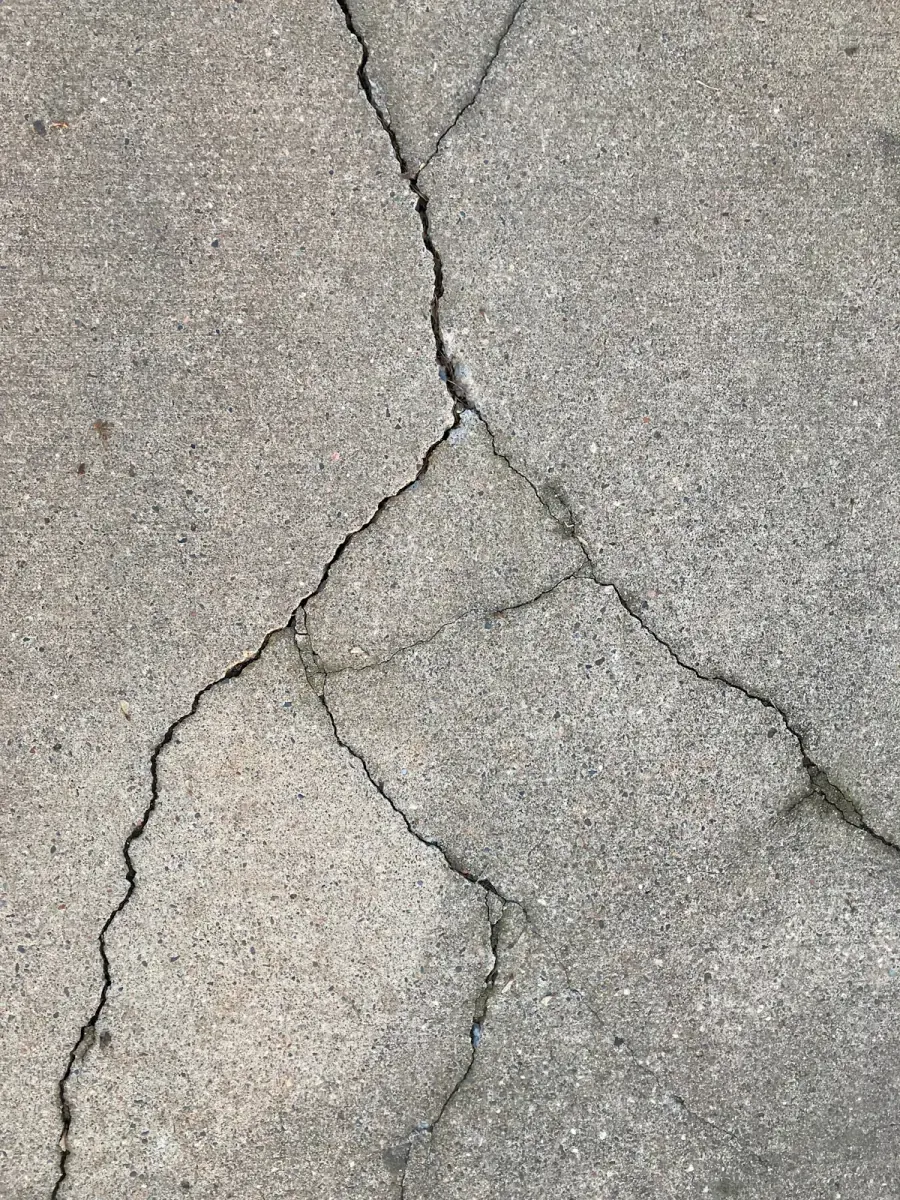
A cracked slab can be lifted if the fragments are still large and structurally sound. The port pattern is adjusted so each fragment is supported independently and injection pressure is kept low and distributed. What lifting does not do is close the cracks, so if appearance matters they need separate cosmetic repair. A slab broken into many small pieces is a replacement job.
Does concrete leveling crack the slab?
Properly executed levelling does not crack sound concrete, because the lift is distributed across many ports and applied in small increments while elevations are read continuously. Cracking happens when a slab is raised too fast, from too few ports, or beyond what the concrete can take. Thin slabs, high lift targets and pre-existing cracks all raise the risk, which is why we measure thickness before committing.
What are the drawbacks of concrete leveling?
Three honest drawbacks. It does not repair cracks, spalling or surface damage, so a cosmetically poor slab stays cosmetically poor at the correct elevation. It leaves visible patches, small with foam and obvious with mudjacking. And it does not address the cause of the settlement, so an uncorrected water source will re-open the void regardless of what was injected.
Is replacement better because it fixes the base?
Only if the base work is actually done, and it often is not. A replacement quote that prices demolition and a new pour but not proper base preparation puts new concrete on the same subgrade that failed the old slab. Ask any replacement quote to state the base specification, compaction and the drainage correction. Without those, replacement buys you newer concrete on the same problem.
How long does replacement take compared with lifting?
Lifting a residential slab takes two to five hours and, with polyurethane foam, carries full load within about an hour of finishing. Replacement takes one to three days of work plus seven to twenty-eight days of cure before full vehicle loading. On a single driveway that difference is weeks of disruption, and it belongs in the comparison alongside the price.
Get the measured answer
We core-measure thickness, shoot elevations and check the perimeter before recommending anything. If your slab should be replaced rather than lifted, that is what the written assessment will say.
- Free written scope with a measured lift plan, not a verbal number
- Polyurethane foam on 5/8 inch holes, patched and colour matched
- Drive on the slab the same day, usually within the hour
- Insured crews, written workmanship guarantee on every lift