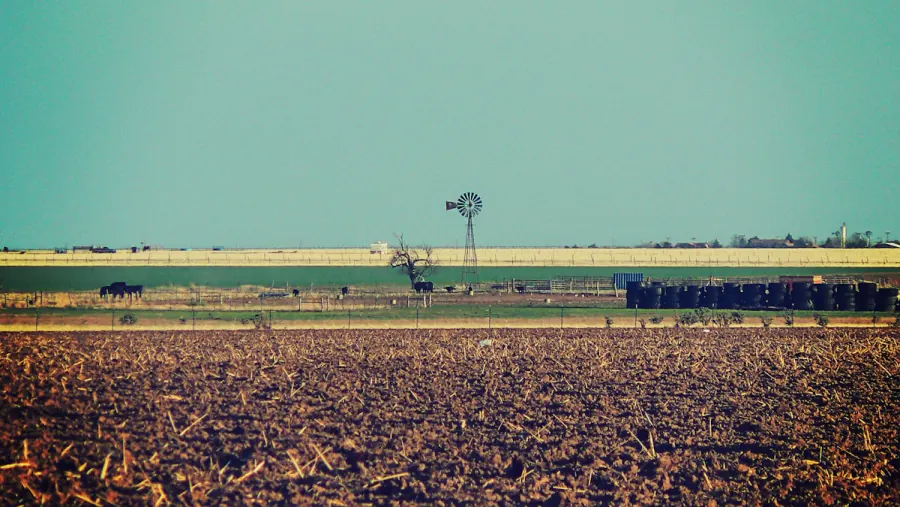
Concrete Leveling Built Around Lubbock Soil
Most concrete levelling content is written for Dallas clay and copy-pasted west. Lubbock is a washout market, not a heave market, and the difference changes how a slab should be assessed, quoted and lifted.
We lift settled concrete in Lubbock and the surrounding South Plains towns, using polyurethane foam injection as the default method and cement slurry mudjacking where the slab genuinely calls for it. Driveways, sidewalks, patios, pool decks, garage floors, interior slabs and commercial floors.
What makes a levelling contractor useful is not the equipment, which is broadly the same everywhere. It is whether they understand the specific ground under your slab well enough to tell you when lifting will hold and when it will not. That is what this page is about.
Why Lubbock is a different problem
Most of the city sits on Amarillo fine sandy loam and Acuff loam, well drained sandy soils formed in the loamy eolian deposits of the Blackwater Draw Formation, over a calcic caliche horizon roughly 30 to 60 inches down. Rain infiltrates readily, reaches that cemented caprock layer, then moves laterally, carrying fine particles out from under slabs as it goes.
That is a washout mechanism. Fines migrate, a cavity opens, and the slab eventually finds it. It is not the expansive-clay heave story that dominates Dallas and Houston content, and a contractor who arrives with that model will scope your job wrong. Around 19 inches of rain a year delivered in a handful of intense convective storms, with long dry spells in between and a freeze window from October through April, produces a cycle of shrink, saturate, wash and collapse.
The exception is real and it is the part nobody else in this market talks about. On playa margins the soil is Randall clay, a very-fine smectitic thermic soil that is poorly drained and frequently ponded for very long periods, with slickensides and high shrink-swell behaviour. Lubbock's playas are incorporated into city parks and are central to municipal storm drainage, which is exactly why so many residential lots drain toward one. Those lots genuinely do heave as well as settle, and they need drainage written into the scope.
The playa question we ask on every job
Before we scope anything we establish where your lot drains. The Texas Water Development Board recorded average playa infiltration rates ranging from under 0.04 to over 0.8 inches per day across 38 monitored basins, with the highest rates where the soils are sandier, and an average recharge of around 221,000 acre-feet a year across the monitored Panhandle counties.
The same research found that rapid infiltration through large cracks and burrows affected only the upper six feet of the profile, with most recharge occurring as gradual percolation after repeated flood events. Practically, that means a lot on a playa rim experiences long, slow saturation cycles rather than quick drainage, and a slab on Randall clay there behaves differently from one two streets away on Amarillo loam.
Naming which of those two situations you are in is the single most useful thing we do before quoting, and it takes one conversation and a look at the grade.

How we work
Six commitments that are on every quote we issue rather than on a page nobody reads.
We measure before we quote
Laser elevations across the slab, a tap survey to map the void, and a core measurement of slab thickness at the first port. A quote produced from the kerb is a guess, and the correction always arrives mid-job at your expense rather than ours.
Both methods on every sheet
Foam at $5 to $12 per square foot and mudjacking at $3 to $8, priced side by side with the cure time and expected service life of each. On a meaningful minority of jobs slurry is genuinely the better value, and we say so even though it is the smaller sale.
We name the water source
Every written scope states what is delivering water to the subgrade, whether or not correcting it falls inside our work. A void that formed because a downspout discharges on the approach will re-form after any lift if that discharge continues.
We turn work down
Slabs under four inches measured, concrete broken into many fragments, surfaces spalled through to the aggregate, and root-heaved panels all get a recommendation against lifting. Selling a lift that will not hold costs us a second visit and costs you the whole fee.
Fixed price, stated volume
The quote carries a fixed cost for the assessed void and a stated per-unit rate for material beyond it. You can compare that line by line against another contractor. A single total with no detail cannot be compared with anything.
Written guarantee, terms up front
The workmanship guarantee and exactly what it covers are on the quote before you accept, not produced afterward. What it cannot cover is continued settlement from a water source nobody corrected, which is why we put that in writing first.
What we actually do on site
The assessment takes about half an hour and costs nothing. We shoot laser elevations across the slab to establish the real drop rather than the visible one. We tap the slab every few feet to map the void, which is almost always larger than the sunken area you can see. We core-measure thickness at the first port rather than assuming four inches. And we walk the drainage to find what is putting water into the subgrade.
You then get a written scope stating the measured drop, the estimated material volume, both methods priced with cure time and expected service life, the water source we observed, and a plain verdict on whether lifting is appropriate at all. If it says replace, it says replace, and we are not the party who benefits from that conclusion.
Permits and registration, plainly
Lifting an existing slab in place is generally treated as a repair rather than construction, so it usually does not pull a permit. Replacing a driveway approach or a public sidewalk does: City of Lubbock ordinance requires a permit from the building official for constructing, reconstructing, repairing, altering or replacing sidewalks and driveways on a public street or alley, with a four inch minimum concrete thickness. Contractors working in the City must register, which requires proof of $100,000 general liability insurance or a $20,000 compliance bond.
Texas has no state general contractor licence for concrete work, no statewide exam and no statewide bond. Only electricians, plumbers and HVAC contractors hold state credentials, which you can verify for yourself at the Texas Department of Licensing and Regulation. That makes municipal registration and an insurance certificate the two documents worth asking any contractor to produce, including us. Confirm current requirements with City of Lubbock Building Safety at 1314 Avenue K, 806-775-2087. The full breakdown is on the Lubbock concrete permits guide.
What we do not claim
Lifting does not repair cracks, spalling or surface damage. It does not stop a tree root growing under a sidewalk. It does not prevent smectitic clay on a playa margin from swelling when the basin ponds. It does not add structural capacity to a slab that was under-specified for the load it carries. And it does not fix drainage: if water keeps arriving at the same spot, the void starts re-forming the day we leave.
Every one of those limits is stated in the written scope rather than discovered later. If any of them applies to your slab, you will know before you spend anything. The judgement calls are laid out in full on the lifting versus replacement guide.
Where we work
Lubbock and Lubbock County, plus Wolfforth, Slaton, Shallowater and Idalou, with regular scheduled blocks in Levelland in Hockley County and Plainview in Hale County. There is no travel charge inside Lubbock County, and the county work is scheduled in blocks so the per-square-foot rate stays the same. The full list is on the service area page.
Every enquiry comes through the quote form so it arrives with the slab type, the location and the size already attached, which means the assessment can be scheduled properly rather than guessed at over a call. Send the form on the contact page and you will get a real response with a real date, not a call centre.
About how we work: common questions
How do I choose a concrete leveling contractor in Lubbock?
Choose on what the assessment produces, not on the price alone. A contractor worth hiring measures the drop with a laser, taps the slab to map the void, core-measures thickness at the first port and walks the drainage, then hands you a written scope with a stated material volume. In Texas there is no state concrete licence to check, so the two documents worth asking for are City of Lubbock contractor registration and a current certificate of general liability insurance.
Why do you price both mudjacking and foam on every quote?
Because on a meaningful minority of jobs the slurry is genuinely the better value and you deserve to see that, even though it is the smaller sale for us. Thick, well-supported commercial slabs over engineered fill do not care about the extra weight, and there mudjacking's lower per-square-foot rate wins outright. On washed-out residential sand, foam's 2 to 4 pounds per cubic foot against slurry's 100 to 150 decides how long the lift holds.
What jobs do you turn down?
Four: slabs measuring under four inches at the core, concrete broken into many small fragments, surfaces spalled through to the aggregate, and panels heaved upward by a tree root rather than settled. In each case injection either cannot be held safely or does not address the actual cause, so the written assessment recommends against lifting. Selling a lift that will not hold costs us a return visit and costs you the whole fee.
Is concrete leveling in Lubbock different from Dallas or Houston?
Yes, fundamentally. Dallas and Houston content is written around expansive clay heave. Most of Lubbock sits on Amarillo and Acuff sandy soils over a calcic caliche horizon, where the failure mode is washout: water reaches the cemented layer, moves sideways, carries fines out from under the slab and opens a void. The exception is playa rims on Randall clay, which genuinely do heave, and that is precisely why we establish where your lot drains before scoping anything.
Why is there no phone number on this site?
Every enquiry comes through the form so it arrives with the slab type, the location and the size already attached, which means the assessment can be scheduled properly rather than guessed at during a call. You get a written reply from a person, usually within one business day, and there is a record of what was asked and what was answered.
Do you guarantee the work?
Yes, and the workmanship guarantee plus exactly what it covers appear on the quote before you accept rather than being produced afterward. What no guarantee can cover is continued settlement from a water source nobody corrected, which is why every written scope names the water source we observed and why we put that limitation in writing before you spend anything.
Get a written assessment
Half an hour on site, no charge, no obligation. Laser elevations, a void map, a measured slab thickness, both methods priced, and an honest verdict on whether lifting is the right repair.
- Free written scope with a measured lift plan, not a verbal number
- Polyurethane foam on 5/8 inch holes, patched and colour matched
- Drive on the slab the same day, usually within the hour
- Insured crews, written workmanship guarantee on every lift