Concrete Leveling in Slaton, TX
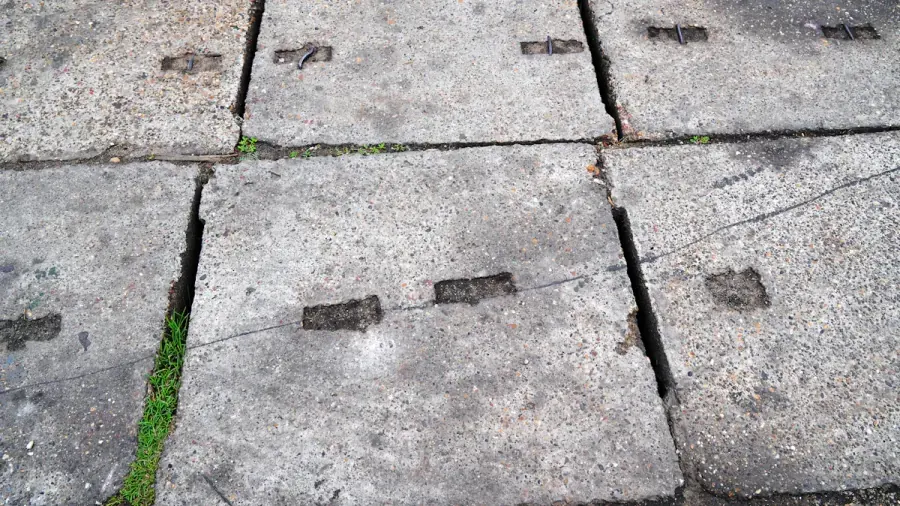
Slaton has the oldest concrete in Lubbock County, poured on a townsite laid out in 1911. Much of it is thick, dense and entirely worth lifting. We measure before we recommend, and we say so when a panel is past saving.
Concrete leveling in Slaton costs $5 to $12 per square foot with polyurethane foam, and most of what we lift here is old flatwork rather than new. Sidewalks, front walks, driveway aprons and porches on the original townsite make up the bulk of the work, and the concrete is usually sound enough to justify lifting rather than replacing.
Slaton was founded on 15 June 1911 as a Santa Fe Railroad division point, on a townsite purchased that April. The street grid was designed after Washington, D.C., with diagonal avenues radiating off a central square, and at its peak it was the largest division in the Santa Fe system with four daily trains each way between Amarillo and Sweetwater. The concrete that went down alongside that build-out is what we are working on today.
Why old Slaton flatwork sits unevenly
A century of moisture cycling under thin, unreinforced panels produces differential settlement at nearly every joint. The soil beneath is Amarillo fine sandy loam and Acuff loam, well drained sandy soils formed in the eolian deposits of the Blackwater Draw Formation over a calcic caliche horizon roughly 30 to 60 inches down. Water infiltrates easily, hits that cemented layer, moves laterally and carries fines out from under the concrete.
Add a freeze window that runs October through April with January average lows near 26 degrees, and roughly 19 inches of rainfall a year arriving mostly in intense summer storms, and you have a hundred years of shrink, saturate, wash and collapse under panels that were poured four inches thick with no reinforcement. The surprise is not that they are uneven. It is that so many of them are still in liftable condition.
When an old panel is past lifting
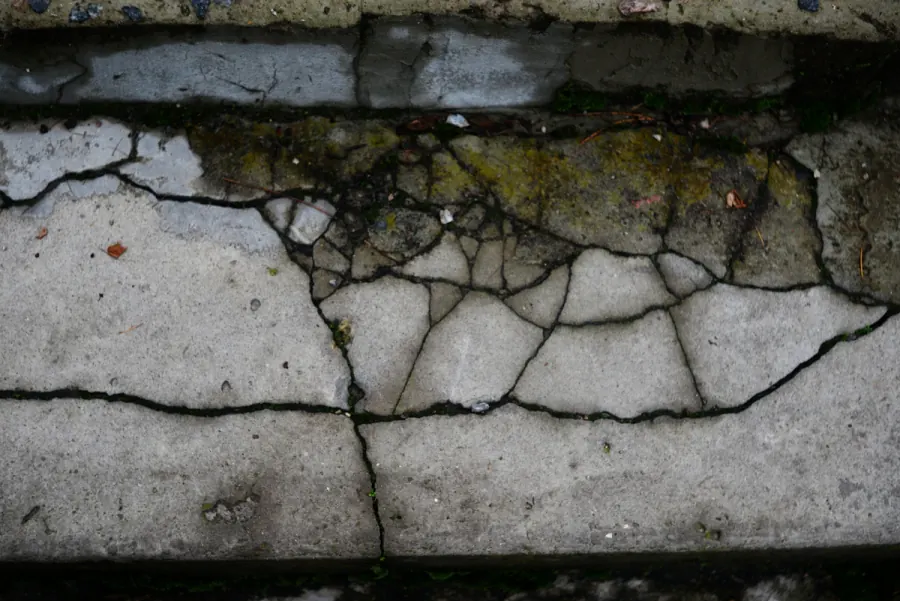
Four conditions take a slab out of lifting territory regardless of how much you would rather not replace it. Measured thickness under four inches at the core, which we check at the first port rather than assume. Breakage into many small fragments, because each one then needs supporting independently and the result is a patchwork.
Surface spalling through to the aggregate, where the concrete has lost its wearing surface and lifting only relocates a failing slab. And severe edge deterioration where the panel no longer has sound bearing at its perimeter. On Slaton's oldest walks we find all four from time to time, and we put it in the written assessment rather than discovering it halfway through a lift.
The more common finding, though, is the opposite. Early townsite concrete was often poured thick and cured slowly in an era before rushed schedules, and it is denser than a lot of modern flatwork. That concrete lifts well.
What concrete leveling costs in Slaton
Slaton pricing matches Lubbock pricing and there is no travel surcharge for the fifteen mile run southeast. Sidewalk work here is often sold by the panel rather than the square foot, because a typical job is correcting three or four specific trip hazards along a frontage rather than lifting a whole run.
| Slab | Size | Typical cost |
|---|---|---|
| Single sidewalk panel | 25 sq ft | $500 to $700 |
| Three panel trip hazard run | 75 sq ft | $650 to $1,100 |
| Front walk and porch step | 150 sq ft | $800 to $1,700 |
| Driveway apron | 200 sq ft | $1,000 to $2,400 |
| Two-car driveway | 500 sq ft | $1,200 to $3,500 |
| Storefront apron | 300 sq ft | $1,400 to $3,200 |
Mudjacking at $3 to $8 per square foot is quoted where the slab suits it. On thin or aged panels we usually steer away from slurry, because a 2 inch port removes more material from a slab that has less to spare and the added weight is permanent.
In most Texas municipalities the adjoining owner maintains the sidewalk but the walk itself sits in public right of way. That split means you can be liable for a trip hazard and still need permission to alter the panel. Check with the City of Slaton first and keep their answer in writing. It is a five minute call that prevents an expensive misunderstanding.
Settlement or heave, and why it changes the answer
Settling is the slab dropping because support was lost beneath it. Heaving is the slab rising because something beneath it expanded or grew. On Slaton's mature streets, where shade trees are often as old as the houses, root heave is a real second cause and it is frequently mistaken for settlement of the neighbouring panel.
The test is simple. Settled panels sit low relative to their neighbours and often sound hollow when tapped with a hammer handle, because there is a void under them. Heaved panels sit proud and sound solid. Lifting corrects the first. For the second, raising the surrounding panels to meet a root-heaved one is a temporary fix that will be out of level again as the root grows, and we will say so rather than take the job. More on telling them apart is on the diagnosis page.
Foam or slurry on century-old concrete
We lean toward foam on Slaton's older flatwork for two specific reasons rather than as a blanket preference. Hole size: foam injects through 5/8 inch ports against 1 to 2 inch for slurry, which matters on a thin panel with less material to spare. And weight: cured foam adds 2 to 4 pounds per cubic foot against 100 to 150 for a cement slurry, so it does not re-load soil that has already spent a century failing to hold the slab up. Full detail on the method comparison page.
What we do in Slaton
Sidewalk and trip-hazard correction on residential frontages, front walks and porch steps, driveways and aprons, patios, storefront aprons on the townsite grid, and void filling under sound slabs that have not yet dropped. We cover the town, the Slaton ISD area and the farm roads out toward Posey and Wilson, with no travel charge.
Slaton concrete leveling questions
Can hundred-year-old concrete be lifted, or does it have to be replaced?
Old concrete can usually be lifted, and age alone is not a reason to replace it. What matters is thickness, whether the slab is broken into many fragments, and whether the surface has spalled through to the aggregate. Plenty of Slaton flatwork from the early townsite era is thick, dense, well-cured concrete in better condition than modern work, and it lifts cleanly. We core-measure at the first port before committing either way.
How much does concrete leveling cost in Slaton?
Concrete leveling in Slaton costs $5 to $12 per square foot with polyurethane foam and $3 to $8 with mudjacking, matching Lubbock rates with no travel surcharge for the fifteen mile run southeast. A single lifted sidewalk panel starts around $500 and a two-car driveway usually falls between $1,200 and $3,500.
Why are Slaton's sidewalks so uneven?
Slaton's sidewalks are uneven mainly because of their age and the number of freeze and thaw cycles they have been through since the townsite was laid out in 1911. A century of seasonal moisture change under thin, unreinforced panels produces differential settlement at almost every joint. Tree roots on the mature streets add a second, separate cause that lifting does not solve on its own.
Is a raised sidewalk panel my responsibility or the city's?
In most Texas municipalities the adjoining property owner is responsible for maintaining the sidewalk in front of their property, though the sidewalk itself sits in public right of way. That split means you may be liable for a trip hazard while still needing permission to alter the panel. Check with the City of Slaton before scheduling work on a public walk, and keep their answer in writing.
Can tree roots be the reason my sidewalk lifted?
Yes, and it is common on Slaton's older streets where the shade trees are as old as the houses. A root growing under a panel raises it rather than dropping it, which is heave rather than settlement. Lifting the neighbouring panels to match a root-heaved one is a temporary fix at best. Those jobs usually need the panel cut out and the root managed, and we will tell you that rather than sell you a lift.
Do you work on the original townsite grid downtown?
Yes. Slaton's centre was laid out on a grid modelled on Washington, D.C., with diagonal avenues radiating off the central square, and the flatwork there is the oldest concrete in the county. We lift residential walks, storefront aprons and municipal panels in that area, and we are candid when a panel is past lifting and needs replacing.
What is the difference between settling and heaving?
Settling is the slab dropping because support beneath it was lost, and heaving is the slab rising because something beneath it expanded or grew. The visual clue is which side of a joint is high: settled panels sit low relative to their neighbours and often sound hollow when tapped, while heaved panels sit proud and stay solid. Lifting fixes settlement. Heave needs the cause removed.
Do you serve the rest of Slaton ISD's area?
Yes, we cover the town and the surrounding county area served by Slaton ISD, which was established in March 1912, along with the farm roads out toward Posey and Wilson. There is no travel charge inside that radius.
Get a Slaton quote
Tell us which panels are lipped and how far. We core-measure thickness on site before recommending anything, and we will tell you plainly if a panel is past lifting.
- Free written scope with a measured lift plan, not a verbal number
- Polyurethane foam on 5/8 inch holes, patched and colour matched
- Drive on the slab the same day, usually within the hour
- Insured crews, written workmanship guarantee on every lift